Fewer than 1% of Google searchers click a page-two result (Backlinko). Learn which SEO tools actually make sense for small businesses—and why AI might be a better investment than expensive subscriptions.
Here's the SEO tool paradox: the tools that show you what to do are expensive, but they don't actually do the work for you.
You pay $139/month (its cheapest paid plan, checked Oct 7, 2026) for Semrush. It tells you to write more blog posts, optimize your Google Business Profile, and build backlinks. Great advice—but who has time to actually do all that?
This guide compares the major SEO tools honestly—what they cost, what they're good for, and when you should skip them entirely for an AI that actually does the SEO work for you.
Watch: How to choose the right SEO tools for your business
The Key Question
Do you need a tool that tells you what to do, or do you need something that actually does the work? For most small businesses, the bottleneck isn't knowledge—it's execution.
Why SEO Still Matters for Small Businesses
Before we dive into tools, here is why ranking on page one matters. Backlinko's analysis of Google click-through rates found:
0.63%
of Google searchers clicked on something from the second page
Unlike paid ads that stop when you stop paying, SEO compounds over time. A blog post you write today can drive traffic for years. According to Ahrefs research, the average top-10 ranking page is 2+ years old. Start now; benefit later.
Free tools show you data—they don't do the work. Google Search Console tells you to write more content; it doesn't write it. Google Business Profile shows you need to post; it doesn't create posts. This is where paid tools OR AI automation become valuable.
The AI Alternative: Tools That Do the Work
A Different Way to Think About SEO Tools
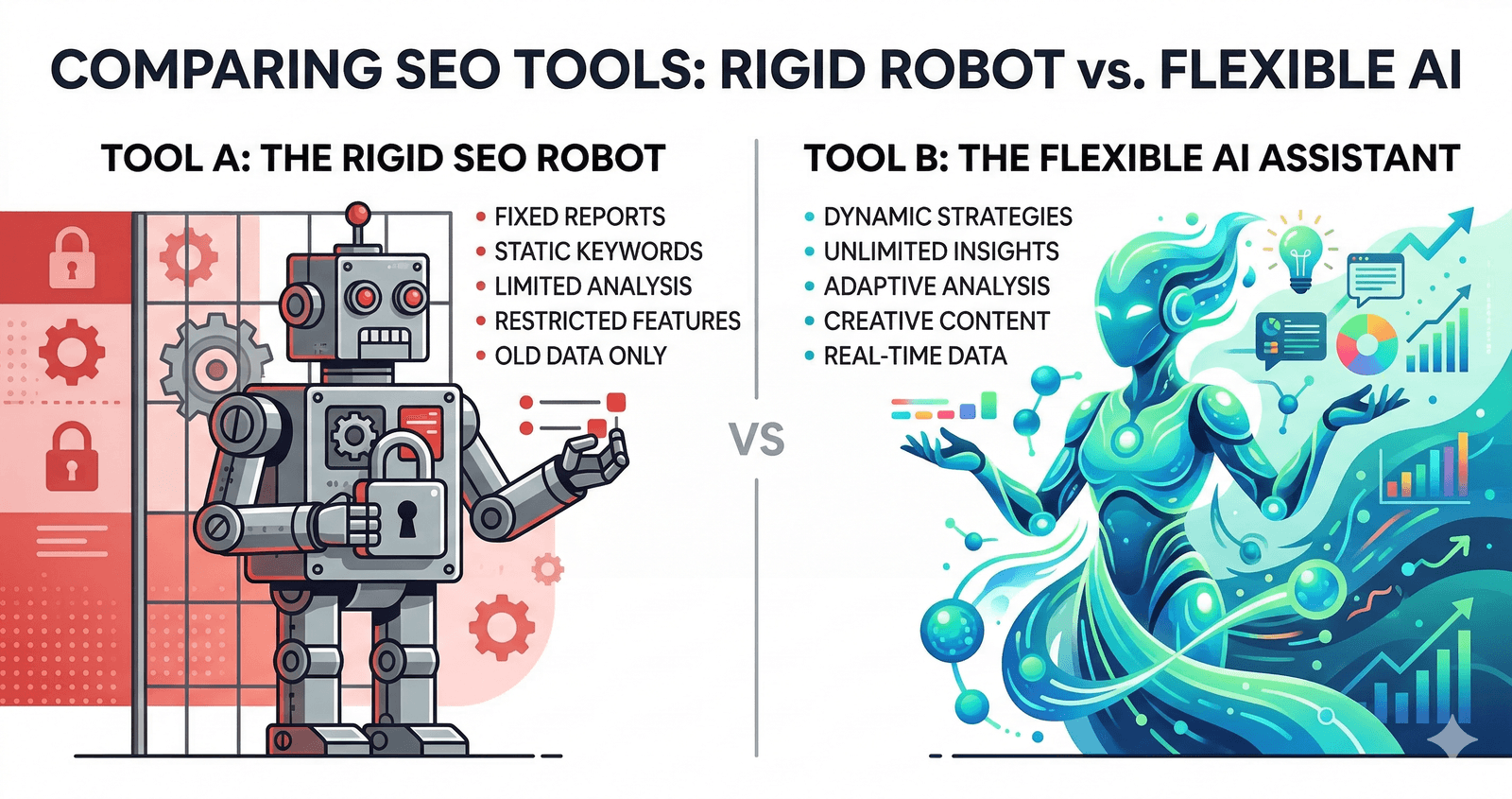
Traditional SEO tools: Tell you what to do (then you have to do it)
AI SEO tools: Actually do the work (you approve what gets published)
SEMRUSH TELLS YOU:
"Write 2 blog posts targeting these keywords this week"
RANKY DOES:
Writes and publishes those blog posts automatically
What Ranky (Your AI SEO Employee) Actually Does
Writes SEO-Optimized Blog Posts
Daily blog posts targeting keywords your customers search for. Proper headings, internal links, meta descriptions—all the on-page SEO handled.
Without AI: You'd spend 2-4 hours per post doing this yourself
Manages Google Business Profile
Weekly posts, photo updates, service descriptions, Q&A management. Keeps your profile active so Google keeps you visible.
Without AI: Most businesses let their GBP go stale
Builds Content That Attracts Links
Creates comprehensive, linkable content that naturally attracts backlinks over time through quality and depth.
Without AI: Link building is time-intensive and often sketchy
Monitors Rankings & Adjusts
Tracks which content performs, identifies opportunities, and adjusts strategy based on what's working.
Without AI: Requires constant monitoring and tool subscriptions
The Cost Comparison
$139/mo
Semrush, cheapest paid plan (tells you what to do)
$49/mo
Moz entry plan (budget option)
14-day
Ranky refundable pilot (does the work for you; see pricing)
Getting Started with SEO
1
Set Up Free Google Tools
Google Search Console + Analytics + Business Profile. These are non-negotiable and free. Do this first regardless of what else you use.
2
Decide: Research or Execution?
Do you need a tool to tell you what to do (Semrush, Ahrefs)? Or do you need something that does the work (Ranky)? Most small businesses need execution more than research.
3
Start Creating Content Consistently
SEO success comes from consistent execution over time. Whether you write yourself, hire, or use AI—consistency beats perfection.
4
Be Patient
SEO takes 3-6 months to show results. Don't quit after 30 days. The businesses that win at SEO are the ones that keep going.
Ready to Start Ranking?
Skip the expensive tools that just tell you what you already know. Let Ranky handle your SEO execution while you run your business. Start with a refundable pilot — 100% refund within 14 days.
Yes, but not necessarily the expensive ones. If customers can't find you in Google or in AI answers, they find your competitors. The real question is whether you need a $139/month tool that tells you what to do (Semrush's cheapest paid plan, checked Oct 7, 2026), or help that does the work.
What's the best free SEO tool for small businesses?
Google Search Console and Google Analytics are essential free tools that show how your site performs in search. Google Business Profile is crucial for local SEO. These provide data, but you still need to take action on what they show—which is where AI SEO tools shine by automating the work.
Is Ahrefs or Semrush better for small businesses?
For many small businesses both are more than they need. Per their pricing pages (checked Oct 7, 2026): Ahrefs has a free tier, a $29/month Starter plan and full plans from $129/month (Lite); Semrush has a free plan and paid plans from $139/month. Moz starts at $49/month and SE Ranking at $129/month. If you'd rather have the work done than a tool, Dooza's Ranky does SEO for you (see dooza.ai/pricing; every Dooza product starts with a refundable pilot).
How long does SEO take to show results?
Typically 3-6 months to see measurable improvements, 6-12 months for significant results. SEO is a compounding investment—the longer you do it consistently, the stronger results become. This is why automation is valuable: AI ensures consistent execution even when you're too busy to do it manually.
What's more important: on-page SEO or backlinks?
For small businesses, start with on-page SEO and content. You control these directly. Technical SEO (site speed, mobile-friendly, etc.) and quality content are foundational. Backlinks matter, but for local businesses, Google Business Profile optimization and local citations often have more immediate impact.
Can AI really do SEO as well as an agency?
AI handles the execution tasks excellently: writing optimized content, updating Google Business Profile, monitoring rankings, and identifying opportunities. What AI can't do is high-level strategy for complex competitive markets. For most small businesses, AI execution is more valuable than agency strategy because the bottleneck is usually doing the work, not knowing what to do.
How We Automate SEO at Dooza - AI Employees + Workflows That Run 24/7
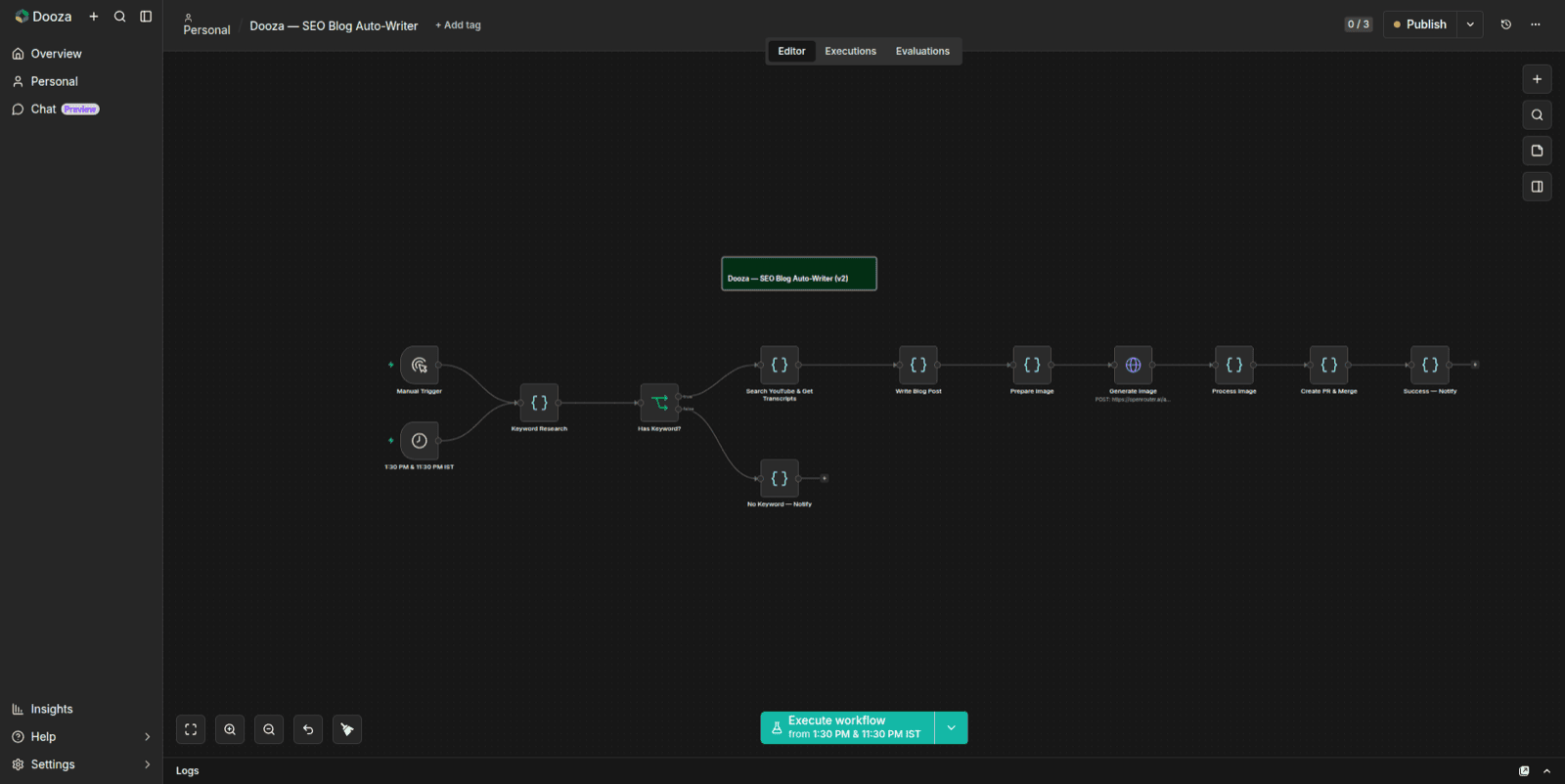
We publish SEO-optimized blog posts every day without lifting a finger. Here is exactly how we built an automated SEO pipeline using Dooza AI Employees and Dooza Agents.
Outrank.so is a self-serve SEO autopilot tool; Dooza Ranky is an AI SEO employee set up with Dooza engineers. An honest comparison, with Outrank's features and pricing checked on its own site on October 7, 2026.
Start with a refundable pilot — 100% refund within 14 days. A Dooza engineer scopes it with you on a free 30-minute call. Pricing depends on the product; see pricing.